Buying a Listed Historic Property: Restrictions, Costs, and Opportunities
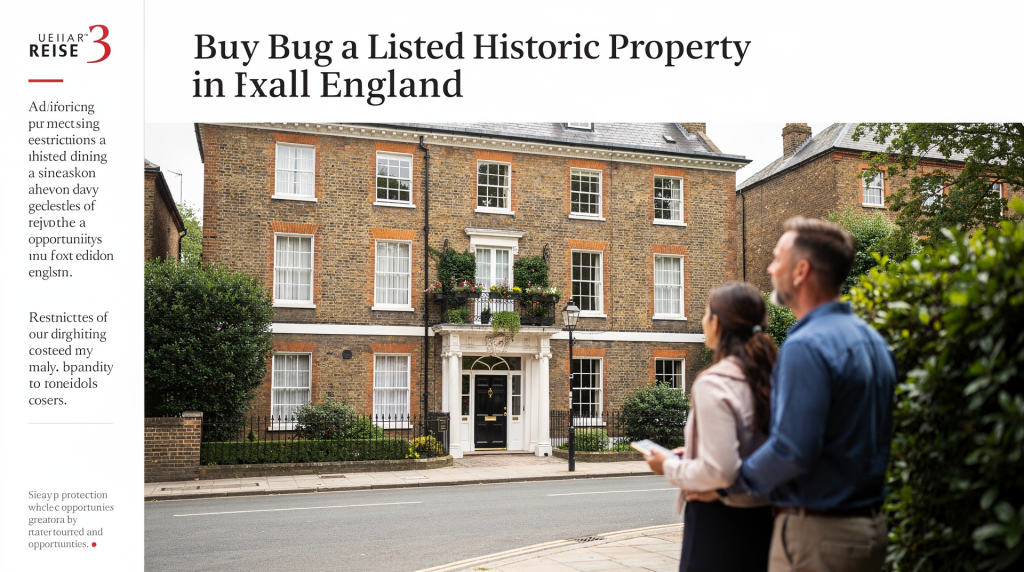
Buying a listed historic property is rarely a simple property transaction. It is a decision to become part-owner, part-guardian of a building with legal protections, maintenance responsibilities, and long-term potential that often outweighs the short-term inconvenience. If you understand the rules before you buy, a listed house can be one of the most rewarding properties you will ever own.
The key point is this: listing does not prevent change, but it does regulate it. In England, works that affect the character of a listed building generally require Listed Building Consent, and demolition, alteration, or extension without the proper authorization can lead to enforcement and even prosecution.
What “listed” actually means
A listed building is a property recognized for special architectural or historic interest and protected through the planning system. That protection applies to all grades of listing, and the statutory controls are not limited to grand houses; they also affect cottages, farm buildings, townhouses, and estate outbuildings. I have seen modest workers’ cottages listed for their regional distinctiveness — the way local stone was laid, the survival of a rare bread oven, or a complete set of early nineteenth-century casements — and I have seen substantial Georgian rectories listed for their architectural set-pieces. The principle is the same: the building matters beyond its four walls.
In practical terms, listing means three things for a buyer:
- You cannot assume you may modernize freely.
- Original fabric matters more than in an ordinary house.
- Repairs, alterations, and extensions may need formal permission before work begins.
Many buyers are surprised by how far the protection can reach. It is not only the obvious grand features that matter. Historic staircases, fireplaces, doors, plasterwork, windows, roof coverings, and even some decorative finishes can fall within the building’s protected character. I recall a client who assumed only the façade was protected, only to discover that the internal dog-leg staircase with its original splat balusters and mahogany handrail was specifically noted in the list entry. The lesson: read the description, but also read the building itself. The list entry is a starting point, not an exhaustive inventory.
The core rule: consent before works
The most important legal distinction is between ordinary repair and works that affect significance or character. Listed Building Consent is generally required for demolition, alterations, and extensions that affect the building’s special interest.
Some local authorities also make clear that the same principle can apply to internal changes if they affect historic fabric or character. This means a project that looks minor on paper — removing a twentieth-century partition, for instance — can still need consent in practice if that partition abuts original plasterwork or conceals a historic fireplace opening. The test is not the size of the work but its impact on significance.
Works that often need Listed Building Consent
- Removing or altering historic internal features such as fireplaces, staircases, or plasterwork
- Replacing original windows or doors
- Changing roof coverings or external materials in a way that affects character
- Building extensions that attach to or alter the listed structure
- Demolition, even partial demolition
Works that may not need consent
- Like-for-like repairs using appropriate traditional materials
- Replacing modern fittings that are not historic fabric
- Routine maintenance that does not alter character
The danger is assuming a work counts as “repair” when it is actually replacement or alteration. In listed buildings, that distinction matters more than the language used in an estate agent’s brochure. I have seen too many cases where a vendor described new windows as “repaired originals” because the frames were timber, when in fact the entire assembly had been replaced with modern softwood units that altered the glazing pattern and lost the original crown glass. That is not repair; it is alteration, and it can create a liability for the next owner.
Planning permission is not the same as Listed Building Consent
This is one of the most common sources of confusion. Planning permission and Listed Building Consent are separate approvals. You may need one, both, or neither, depending on the work.
- Planning permission deals with development and use.
- Listed Building Consent deals with impact on the building’s historic character.
A buyer planning a rear extension, dormer, or major internal reconfiguration should check both regimes early. A scheme can be refused planning permission even if the heritage impact is acceptable, and vice versa. I have worked on cases where a rear extension was granted planning permission but refused Listed Building Consent because the design, while inoffensive in planning terms, would have obscured a significant historic elevation and compromised the reading of the original plan form. The two regimes ask different questions, and you need satisfactory answers to both.
What to check before you buy
The due diligence stage matters more with a listed property than with a standard home. A building survey alone is not enough if you do not also understand the heritage constraints. I always advise clients to treat the paperwork as part of the building fabric: it tells you what was done, when, and whether the local authority accepted the works.
Essential pre-purchase checks
- Confirm the exact listing grade and description.
- Read the list entry carefully, but do not treat it as the full extent of protection.
- Ask whether previous alterations were consented properly.
- Check for illegal or undocumented works.
- Review planning history and listed building consent records.
- Identify any conservation area or curtilage restrictions.
- Compare the property’s current condition with what a surveyor reports.
If the house has had several owners, the most valuable documents are often not sales particulars but old photographs, planning files, and previous consent applications. These reveal what was changed, when, and whether the local authority accepted the works. I once traced a missing consent for a window replacement through a 1970s planning file that included a handwritten note from the conservation officer accepting the work on condition that the original glass was reused. That note protected the seller and informed the buyer. Without it, the windows would have appeared undocumented and potentially unlawful.
Red flags in the paperwork
- “Historic features removed by previous owner” with no consent record
- Modern windows or doors in a building where matching replacements would have required approval
- Visible signs of structural movement, damp, or roof failure
- Long periods of vacancy
- Repeated patch repairs using incompatible materials
- Extensions or internal openings that do not appear in the planning file
If you find works that may have been done without consent, do not ignore them. Liability can follow the property, not just the person who carried out the work. Enforcement action can be taken against the current owner regardless of who made the alteration. I have seen sales stall at the last moment because a buyer’s solicitor flagged a missing consent for a dormer window added twenty years earlier. The seller had to apply for retrospective consent before the transaction could proceed, and the process added months to the timeline.
Why the real cost is not just the purchase price
The purchase price is only the beginning. Historic properties can be expensive to maintain because specialist repair work, traditional materials, and skilled labor cost more than standard modern replacements. A lime plaster repair, for instance, requires a craftsman who understands the curing time, the mix proportions, and the substrate preparation. It is not a job for a general builder accustomed to gypsum plaster and quick turnarounds.
A useful way to think about the budget is in three layers:
| Cost layer | What it covers | Typical pressure points |
|---|---|---|
| Acquisition costs | Legal fees, searches, survey, lender requirements | More specialist due diligence than a standard home |
| Immediate repair costs | Roof, drainage, timber, masonry, joinery, services | Hidden defects, urgent stabilization |
| Long-term stewardship costs | Cyclical maintenance, insurance, inspections, specialist trades | Ongoing care rather than one-off fixes |
Historic-house owners and insurers both recognize that maintenance is the real financial commitment. Independent industry guidance also shows that listed-building insurance premiums tend to be higher than standard cover, reflecting specialist reinstatement and repair risk.
Where money usually goes
- Roofs and rainwater goods
- Chimneys and stacks
- Lime mortars and masonry repairs
- Joinery repair rather than wholesale replacement
- Window refurbishment
- Electrical rewiring in a way that avoids unnecessary harm
- Heating upgrades that respect the fabric
- Professional fees for heritage advice and drawings
A recurring mistake is budgeting only for visible cosmetic works. In old buildings, the expensive problems are often hidden: slipped slates, failed gutters, damp introduced by cement repairs, or timber decay behind later finishes. I have walked through houses that looked immaculate on the surface, only to find that cementitious render had trapped moisture against the timber frame for decades, causing rot that required extensive and costly intervention. The true condition of a listed building is rarely apparent on a first viewing.
Insurance, lenders, and professional support
Listed properties can be insured and mortgaged, but the process is usually more demanding than for a standard house. Insurers often want a detailed understanding of construction, occupancy, and reinstatement costs, while lenders may ask for a stronger survey or valuation. I have seen lenders require a full structural survey and a specialist heritage report before agreeing to lend on a Grade II* property, even when the building appeared to be in sound condition.
What insurers typically care about
- The exact construction and age of the building
- Whether the property is occupied full time
- Previous claims
- Fire protection and security
- The cost of specialist reinstatement
What professionals can save you from
- A surveyor who understands historic fabric can separate serious defects from ordinary age-related wear.
- A heritage consultant can advise whether works are likely to need consent.
- A conservation architect can help shape a compliant and cost-effective scheme.
- A solicitor familiar with listed buildings can flag missing consent records and title issues.
Paying for the right advice before exchange is often cheaper than trying to solve an enforcement problem later. I have seen buyers spend a few thousand pounds on a conservation architect’s feasibility study and then save tens of thousands by avoiding a design that would have been refused consent. The right professional team does not add cost; it prevents wasted expenditure.
Opportunities that make listed property worthwhile
A listed house is not only a liability. It can also be a powerful opportunity if you value authenticity, architectural character, and long-term distinctiveness. The market for listed properties is not driven by square footage or modern finishes; it is driven by rarity, craftsmanship, and a sense of place that cannot be replicated in new construction.
What you gain
- Original details rarely found in modern housing
- A property with architectural identity and often stronger visual presence
- The chance to preserve something culturally important
- Potential prestige and emotional reward from stewardship
- A home that often attracts buyers who value character over uniformity
For many owners, the most satisfying part of the purchase is not ownership in the conventional sense but custodianship. You are improving the building without erasing the evidence of its history. I have worked with owners who spent years researching their house’s history, uncovering the names of past occupants, the original builder’s marks, and the evolution of the plan form. That knowledge deepened their connection to the property and informed every decision they made about its care.
A practical buying strategy
If you are seriously considering a listed property, use a structured approach rather than a hopeful one. The buyers who fare best are those who treat the process as an investigation, not a sprint.
Step-by-step approach
- Identify your priorities. Decide whether you want a family home, a restoration project, or a long-term heritage investment.
- Read the listing and planning history. Establish what is protected and what permissions have already been granted.
- Commission the right survey. Use a surveyor who understands historic construction.
- Investigate alterations. Look for signs that extensions, window changes, internal removals, or roofing work were done with consent.
- Build a realistic repair budget. Include professional fees, contingency, and a reserve for hidden defects.
- Check your planned changes against consent requirements. Be clear about what you hope to alter, remove, or modernize.
- Secure specialist legal and heritage advice before exchange. This is especially important if the property is being sold with uncertainty around previous works.
Common mistakes buyers make
- Assuming “listed” means “untouchable”
- Believing repair and replacement are the same thing
- Underestimating the cost of traditional materials and craftspeople
- Buying on emotion without checking consent history
- Planning a kitchen, extension, or window replacement before understanding the rules
- Treating a standard home survey as enough
- Ignoring damp, timber decay, or roof issues because the house “looks fine”
These mistakes are expensive because listed buildings are rarely forgiving of shortcuts. Modern materials that seem practical often create more damage in the long run. I have seen cement-based mortars trap moisture in stone walls, causing spalling and frost damage that required costly stone replacement. I have seen modern paints seal moisture into timber, accelerating decay. In a listed building, the wrong repair is often worse than no repair at all.
When the opportunity outweighs the restriction
A listed property makes sense when you are comfortable with slower decision-making, specialist advice, and a long-term maintenance mindset. It is a poor fit if you want rapid remodelling or a low-intervention renovation.
It is usually a good match if you want:
- Architectural character that cannot be replicated
- A property you can steward over time
- A home where research and restoration add value
- A building with cultural and local significance
It is usually a bad match if you want:
- Fast cosmetic transformation
- Low-cost modernization
- Frequent layout changes
- Minimal approval processes
Final checklist before you commit
- Do I understand the listing grade and what it protects?
- Do I know which past works were consented?
- Have I budgeted for specialist repairs and professional advice?
- Have I checked whether my intended changes will need consent?
- Am I comfortable owning a property that rewards patience rather than speed?
If the answer to those questions is yes, a listed historic property can be an exceptional purchase. The best outcomes happen when the buyer respects the building first and the project second.
FAQ
Can you renovate a listed building?
Yes, but renovation must respect the building’s special interest, and many works will need Listed Building Consent. Renovation in the context of a listed building usually means conservation-led repair and adaptation, not wholesale modernization.
Does a listed building need consent for internal changes?
Often, yes, if the changes affect historic fabric or character, such as staircases, fireplaces, joinery, or plasterwork. Even removing a later partition can require consent if it disturbs original fabric or alters the legibility of the historic plan form.
Is planning permission enough?
No. Planning permission and Listed Building Consent are separate approvals, and you may need both. They address different concerns and are assessed under different legislation.
Are repairs always allowed?
No. Like-for-like repairs may be possible without consent, but extensive repairs or replacements can still require approval depending on the impact on character. The distinction hinges on whether the work goes beyond routine maintenance and affects significance.
Is insurance more expensive for listed homes?
It can be. Listed buildings often require specialist cover and higher reinstatement values, which can increase premiums. Insurers factor in the cost of traditional materials, specialist craftspeople, and the longer reinstatement timelines that listed buildings demand.
What is the biggest hidden cost?
Usually the cost of specialist repair work uncovered after purchase, especially roofs, timber, masonry, and defective previous repairs. These defects are often concealed behind modern finishes and only become apparent once work begins.
Conclusion
Buying a listed historic property is less about finding a bargain and more about understanding a contract with the past. The legal restrictions are real, the costs are higher than many buyers expect, and the approval process demands patience. But for the right buyer, those same conditions create a rare opportunity: to live in, care for, and improve a building that has already outlasted generations and can be preserved for the next one. The reward is not a quick return but a deepening relationship with a place that holds its history in every joint, every brick, and every worn threshold.