The Most Important Features to Look for in a Historic House
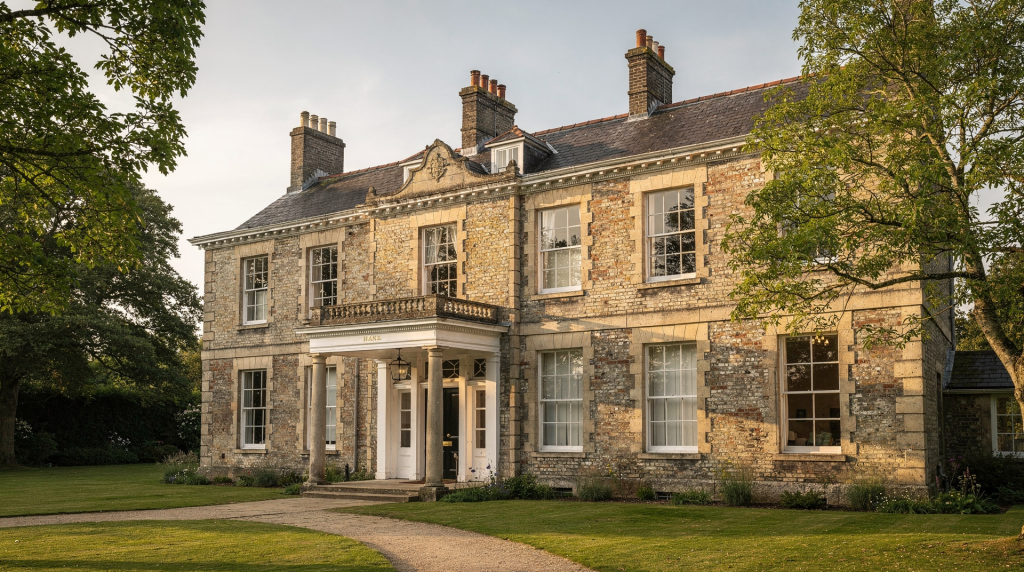
A historic house is rarely a simple purchase. The asking price may reflect kerb appeal, but the long-term cost and value sit elsewhere: in the building’s structure, its surviving original fabric, its legal protections, and the way those factors shape maintenance, alteration, and repair. Buyers who do well with period property tend to focus on three questions: what is genuinely original, what has been changed, and what will be expensive or difficult to put right later.
If you are evaluating a period property in England, the goal is to identify significance, spot risk, and understand maintenance before you commit. This checklist is built around that reality.
Why historic houses need a different checklist
Older homes often have solid walls, traditional roof coverings, timber frames, lime mortar, older services, and irregular repairs from different periods. Those features are not defects by default; they are evidence of how the building was made and maintained. But they also change how the building behaves, what kind of survey it needs, and how it should be repaired.
A standard modern-house mindset can miss serious issues. A surveyor who expects cavity walls, damp-proof courses, and standard service runs may misread lime plaster as failed cement render or recommend sealing a wall that was designed to breathe. In historic properties, the key question is not only “what is wrong?” but also “what is original, what is sensitive, and what can be repaired without damaging the building?”
1. Start with the legal status and protections
Before anything else, check whether the house is listed and whether it sits in a conservation area. A listed building may need special permission for alterations, and some changes that seem small can require consent. Listing protects the whole building, not just the façade, and even internal features can be included. The official list entry is not always exhaustive; absence of a feature from the description does not mean it is unprotected.
What to verify
- The listing grade and official description.
- Which parts of the building are specifically mentioned in the listing record.
- Whether the property lies in a conservation area.
- Any planning history or previous consent issues.
Why it matters
If an important feature is listed, you may not be able to alter it freely. That affects everything from windows and doors to fireplaces, roofs, internal layouts, and sometimes even old surfaces and joinery. Unauthorised works can become a liability when you buy, and even repairs that match the original profile may require consent. Listing is not a prohibition on change, but a control on how change is done.
2. Read the building as a whole, not as isolated rooms
Historic houses should be understood as layered buildings. Some parts may be centuries older than others, and later additions can be just as significant as the main structure. A house may have a medieval core behind a Georgian front, a Victorian service wing, and a twentieth-century infill. The junctions between phases often reveal the most about how the building evolved. A good buyer looks for the building’s story in its structure, not just its decoration.
Look for
- Evidence of later extensions or rebuilt sections.
- Changes in roof line, brickwork, or floor levels.
- Inconsistencies that suggest different construction phases.
- Areas where historic fabric has been removed or concealed.
Practical tip
Walk around the house twice: once for the overall shape and once for details. Look at the roof from a distance, then at the brick bonding, then at internal thresholds where floor levels change. Often the real clues are in junctions between old and new work.
3. Check the structure first: walls, roof, and frame
Structure matters more than finishes. Finishes can be restored, but structural failure is costly and can threaten the building. Older buildings may have solid walls rather than cavity walls, traditional timber frames, or unusual masonry and roof systems. These are expensive areas if problems are ignored.
Key structural features to inspect
- Roof structure and coverings.
- Chimney stacks and flashings.
- Timber framing or exposed structural timber.
- Solid walls and wall movement.
- Floors, especially suspended timber floors.
Common warning signs
- Sagging roof lines.
- Bulges or cracks in masonry.
- Rotten or stressed timbers.
- Patchy repairs using incompatible modern materials.
- Damp staining around chimneys, valleys, and parapets.
Not every crack is structural. Historic buildings move, and some cracks are old and stable. Ask whether a crack is old and filled with dust or fresh and widening. That distinction can save you from unnecessary alarm or expensive misdiagnosis.
4. Understand moisture, damp, and breathability
Damp is one of the most common problems in historic homes, but it is often misunderstood. Older buildings are usually designed to “breathe,” so hard cement repairs, sealed finishes, and poor ventilation can trap moisture and accelerate decay. Traditional solid walls manage moisture by evaporation; lime mortar and lime plaster allow that movement. Modern cement renders, gypsum plaster, vinyl paints, and sealed floors interrupt the cycle.
What to check
- Damp patches on internal walls and around fireplaces.
- Decayed skirting boards, plaster, or floor edges.
- Salt damage and flaking finishes.
- Failed guttering, downpipes, or roof coverings.
- Poor external drainage near walls.
Important nuance
Not every damp issue means rising damp. In historic houses, leaks, condensation, blocked gutters, and incorrect cement repairs are often more likely culprits than a single textbook explanation. Before injecting a chemical damp-proof course, trace the water source.
5. Inspect windows, doors, and joinery carefully
Original joinery often carries a lot of the house’s significance. Historic windows and doors can be highly valuable, but they may also be expensive to restore. Original sash windows, casements, leaded lights, shutters, frames, mouldings, doors, panelling, and stair joinery are often irreplaceable. They carry evidence of date, craftsmanship, and social status.
Features to look for
- Original sash windows, casements, or leaded lights.
- Surviving shutters, frames, and mouldings.
- Handmade doors, panelling, and stair joinery.
- Evidence of repair rather than wholesale replacement.
Why this matters
Replacing original joinery with unsuitable modern units can reduce architectural value and create future consent problems. In many cases, repair is better than replacement. A skilled joiner can splice in new timber, re-glaze, and draught-proof without losing the original profile. Replacement with uPVC or standard softwood often fails on proportion, glazing bars, and sightlines.
6. Examine the roof in detail
The roof is one of the costliest parts of a historic property to maintain. It is the first line of defence; failures there cause damage below. Traditional roofs may use slate, tile, thatch, or other local materials, each with its own repair method and lifespan. Stone slate, clay tile, thatch, lead, and copper all have specific detailing and maintenance cycles.
Ask these questions
- Is the roof original, repaired, or fully replaced?
- Are there slipped slates, failing tiles, or damaged ridge lines?
- Are gutters and rainwater goods functioning properly?
- Has the roof been patched with incompatible materials?
Red flags
- New-looking repairs on an otherwise old building.
- Water staining in attic spaces.
- Out-of-scale roof alterations.
- Missing or poorly detailed chimney flashings.
A roof that has been over-felted or covered with a modern membrane can trap moisture in an old roof structure. Look for ventilation and condensation signs. Thatch requires specialist inspection.
7. Study chimneys, fireplaces, and internal character features
In historic houses, fireplaces, staircases, cellars, panelling, and chimney structures can be older than the house’s later shell. These features are often central to the property’s value and should be inspected as carefully as the structure. They reveal the original plan, heating arrangements, and social hierarchy of the house.
What to inspect
- Chimney stacks for movement or decay.
- Fireplace openings and surrounds.
- Staircases, balusters, and handrails.
- Panelling, cornices, and plaster ceilings.
- Cellars and other service or storage spaces.
Why they matter
These are not just decorative extras. They can reveal the building’s age, original plan, and construction method, and they may be among the features most protected by listing. A blocked fireplace may conceal an original hearth or bread oven; a later stair may sit over an earlier one. Cellars often preserve evidence of earlier floor levels and services.
8. Don’t ignore services: electrics, plumbing, and heating
A beautiful old house with failing services can become very expensive very quickly. Historic buildings often hide outdated wiring, aging pipework, and heating systems that no longer suit the building fabric. Old wiring may be rubber-insulated, pipes may be lead, and radiators may be cast iron. Services are often the least glamorous but most expensive to upgrade.
Check for
- Rewired electrics and certification.
- Evidence of old or improvised plumbing runs.
- Central heating coverage and system age.
- Unsafe additions hidden in lofts, basements, or cupboards.
- Signs that services have been installed without regard for historic fabric.
Practical rule
If the services are old, budget as if they need upgrading unless proven otherwise. Chasing cables into lime plaster can cause damage; surface-mounted conduit or discreet routing may be more appropriate. Ask for an electrical installation condition report and gas safety record.
9. Assess the quality of alterations, not just their age
Not all modern work is bad, and not all old work is good. The real issue is compatibility. Historic houses suffer when repairs are too hard, too sealed, or visually and physically out of scale with the original building. A 1980s extension can be more damaging than a 1780s one if it uses cement, uPVC, and out-of-scale proportions.
Good signs
- Reversible repairs.
- Matching materials and profiles.
- Sensitive restoration of damaged areas.
- Clear evidence of maintenance rather than neglect.
Bad signs
- Cement pointing on soft masonry.
- Replacement windows that distort the façade.
- Duct tape solutions hidden behind fresh paint.
- Extensions that overwhelm the original house.
Look for repairs that allow the building to move and breathe. A good repair should be legible but not jarring; it should not pretend to be original but should respect the original.
10. Look beyond the building to the setting
The setting can be part of the significance. Historic houses often rely on their grounds, approach, boundary walls, outbuildings, and relationship to the landscape. Curtilage and setting are often protected, and the approach, garden walls, gate piers, outbuildings, terraces, and even trees can contribute to significance.
Inspect the wider property
- Boundary walls and gate piers.
- Outbuildings, barns, or lodges.
- Garden layouts and historic paths.
- Retaining walls and terraces.
- Drainage and ground levels around the house.
Why it matters
A house can be structurally sound but still lose value if its setting has been damaged. In heritage terms, the curtilage can matter almost as much as the main structure. Check whether outbuildings are listed in their own right or included in the listing. Ground levels can affect drainage and foundations.
The most important features at a glance
| Feature | What to look for | Why it matters |
|---|---|---|
| Legal status | Listing grade, conservation area, listed elements | Determines what can be changed |
| Structure | Roof, walls, frame, floors | Major repair cost and risk |
| Moisture control | Damp, leaks, ventilation, drainage | Common source of hidden damage |
| Windows and joinery | Original fabric, repairs, replacements | Architectural value and consent issues |
| Chimneys and fireplaces | Movement, decay, originality | High significance, often costly to restore |
| Services | Wiring, plumbing, heating | Safety and upgrade expense |
| Setting | Grounds, walls, outbuildings | Heritage value and planning sensitivity |
What survey should you get?
For older buildings, Historic England and RICS recommend a Level 3 survey, which provides a detailed inspection and report on visible defects, hidden risks, repair options, and likely consequences of delay. A standard HomeBuyer report is often insufficient for period properties. For a listed building, a full buildings survey by someone who understands historic construction is especially important.
Choose a surveyor who can
- Identify historic construction methods.
- Distinguish original fabric from later repair.
- Explain which defects are structural and which are maintenance issues.
- Flag consent risks as well as physical problems.
Ask the surveyor about their experience with listed buildings and traditional materials. A good survey will not just list defects but prioritise them and suggest repair approaches compatible with the building.
A practical buyer’s checklist
Before viewing
- Confirm whether the house is listed or in a conservation area.
- Read the official listing description.
- Check for planning history and recent works.
During the viewing
- Look at roof lines, chimneys, and wall surfaces.
- Open and close windows, doors, and internal joinery.
- Check for damp, settlement, and uneven floors.
- Inspect outbuildings, cellars, and loft spaces if possible.
Take a torch and a camera. Photograph junctions, cracks, and service installations for later reference.
Before exchange
- Order a specialist survey.
- Ask for evidence of consents for past alterations.
- Build a realistic repair budget.
- Identify urgent works versus long-term conservation work.
Common mistakes buyers make
After years of watching buyers, the same patterns repeat.
- Falling in love with decoration and ignoring structure.
- Assuming old damage is “just character.”
- Replacing original elements too quickly.
- Underestimating repair costs for roofs, windows, and services.
- Buying without understanding listing restrictions.
Final thought
The best historic houses are not necessarily the prettiest at first glance. They are the ones with sound structure, legible history, repairable materials, and a legal status you understand before you buy. A house that has been maintained with compatible materials and honest repairs will often outlast a superficially perfect one. If you learn to read a historic house properly, you will see not just risks, but the features that make it worth preserving.
FAQ
What is the single most important thing to check in a historic house?
The structure and roof should come first, because major defects there are the most expensive to fix. A failing roof can cause damage throughout the building, and structural movement can be costly to stabilise.
Is a listed building always harder to buy?
Not always, but it does come with more restrictions on changes, so you need to understand the listing before committing. Some listed buildings have been well maintained and have clear consent histories, while others carry unresolved unauthorised works.
Should I avoid houses with original windows and doors?
No. Original joinery is often a major asset, but it should be assessed for repairability and condition. In many cases, repair is more cost-effective and preserves value better than replacement.
Do all old houses need specialist surveys?
Older buildings are better assessed with a survey designed for historic construction, and RICS recommends a Level 3 survey for older buildings. A surveyor who understands traditional materials and construction methods will give you a more accurate picture.
What causes the most surprise costs?
Roofs, damp-related repairs, outdated services, and poorly executed past alterations are common sources of unexpected expense. These areas often hide problems that only become apparent after purchase.