What Makes a Historic Property Worth Preserving?
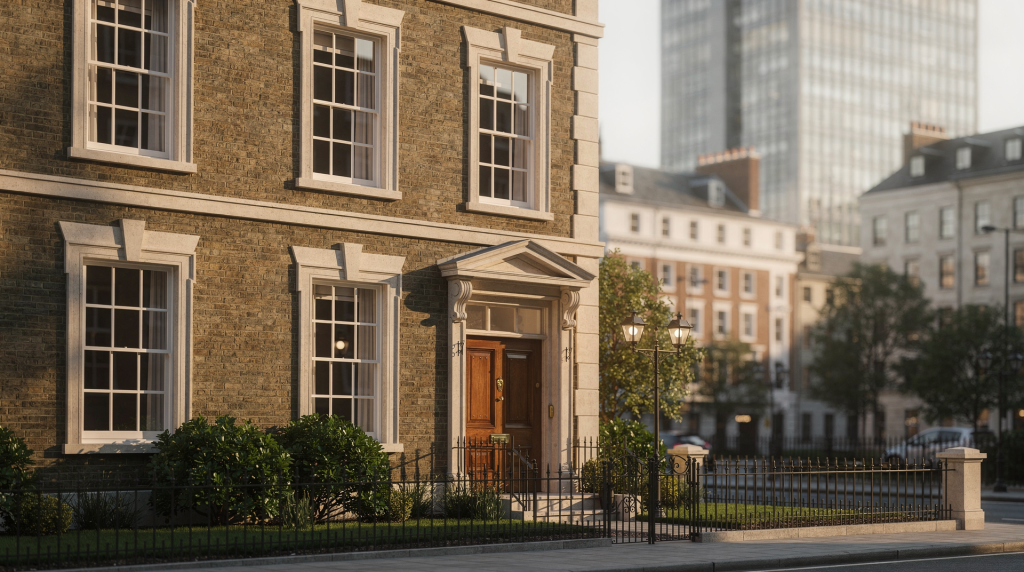
I have walked through hundreds of period houses where the question hung silently in the air: is this one worth the fight? The answer rarely lies in a single feature or a convenient date on a plaque. It emerges from a slower, more careful reading of the building itself — its materials, its scars, its silences. After fifteen years of standing in damp hallways and sunlit drawing rooms across England, I have learned that the properties most deserving of preservation are those that still speak clearly about who made them, who lived in them, and why they matter now.
Understanding “worth preserving”
A historic property earns its place in the preservation record when it retains enough of its original character to communicate why it is significant. This is not about prettiness or pedigree. It is about legibility. The building must still carry identifiable features, physical evidence of its history, and a reason for being valued that goes beyond the simple fact of its age.[1][2]
I often tell clients to think of preservation not as embalming a structure in a particular moment, but as a deliberate act of keeping the elements that carry meaning. A Georgian townhouse with its original stair, sash windows, and room hierarchy still intact tells a story about eighteenth-century domestic life, social order, and craft. Strip those out, and you are left with a shell — old, perhaps, but mute. Preservation, done well, allows for careful repair, sensitive adaptation, and even thoughtful new interventions, so long as the building’s essential voice is not drowned out.[2][10]
The core factors that matter most
When I assess a property, I am weighing several factors simultaneously. No single one is decisive on its own, but together they build a case — or dismantle one. The framework most conservation professionals work within considers age, integrity, significance, rarity, condition, and setting as interlocking criteria.[1][4]
| Factor | What it means | Why it matters |
|---|---|---|
| Age | The building is old enough to fall into a historic period, often around 50 years or more.[1][4] | Age alone is not enough, but it is the starting point. |
| Integrity | The property still retains the features that express its historic character.[2][11][15] | A heavily altered building may have lost the qualities that made it important. |
| Significance | The property is connected to history, architecture, people, or a cultural story.[2][4] | This is what gives the building meaning beyond survival. |
| Rarity | Few comparable examples remain, or it is unusually complete.[3][4] | Rare buildings are harder to replace and easier to justify preserving. |
| Condition | The building may be worn, but its important fabric is still repairable.[2][10] | Poor condition does not automatically rule out preservation. |
| Setting | The site, landscape, or street context still supports the property’s meaning.[15] | A house can lose value if its surroundings are stripped away. |
I have seen properties that scored highly on every factor except integrity, and they failed to convince. I have also seen modest, unremarkable-looking buildings that turned out to be rare survivors of a vanished local industry, their significance and rarity outweighing a battered exterior. The assessment is always holistic.
1. Age is the entry point, not the full argument
Most formal preservation frameworks use a threshold of around fifty years, a convention that gives enough distance for historical perspective to develop.[1][4] But age is a gatekeeper, not a guarantor. I have stood in Victorian terraces so thoroughly gutted and refaced that they offered less to the historical record than a 1930s semi with its original Crittall windows, tiled porch, and intact plan form.
When evaluating age, ask:
- Is the building old enough to belong to a recognizable historic period?
- Does it represent an important phase in local development?
- Has it survived with enough fabric to be read clearly?
A property that is merely old may interest a passing historian. A property that is old and meaningful — that still carries the physical imprint of its time — is the one that justifies the effort and expense of preservation.
2. Integrity tells you whether the story is still visible
Integrity is the quality I find myself returning to again and again during viewings. It is the measure of whether a place can still convey its significance through what survives of its original design, materials, workmanship, feeling, and association.[11][15] Put simply: does the building still look and feel like itself?
A property can lose integrity through a dozen small decisions accumulated over decades:
- Heavy exterior re-cladding that buries original brick or stone
- Removal of original windows or doors, breaking the intended rhythm of the façade
- Major changes to the roofline that alter the building’s silhouette
- Irreversible internal subdivision that destroys the original room hierarchy
- Loss of historic joinery, staircases, or finishes that carried the maker’s mark
- New additions that overwhelm the original form rather than complementing it
Not every alteration is fatal. Many historic buildings have absorbed change over centuries, and those later layers can themselves acquire significance.[10] A Regency house with a sympathetic Victorian extension may tell a richer story than one frozen in a single period. The key question is whether the building still retains enough character-defining features to communicate its history clearly.
Practical test for integrity
When I walk through a property for the first time, I run through a mental checklist. I am looking for:
- Original plan form — can I still read the arrangement of rooms as intended?
- Key exterior materials — brick bond, stone dressing, render type
- Window pattern and proportions — are the openings original, and do the sashes or casements match the period?
- Roof shape and chimneys — often the least altered part of a building
- Staircase, fireplaces, moldings, or paneling — these are the fingerprints of the original builder
- Spatial relationships between principal rooms — the enfilade, the hall, the service wing
- Relationship to garden, outbuildings, or landscape — the building did not exist in isolation
If most of these survive, the case for preservation is considerably stronger. If only the façade remains, you are dealing with a fragment, and the argument becomes harder to sustain.
3. Significance gives the property a reason to survive
Significance is the answer to the question: why does this place matter? It can spring from a single powerful association or from several quieter ones that combine into a compelling whole.[2][4] I have listed houses whose significance lay entirely in their connection to a local figure — a reformer, a craftsman, a writer — and others where the architecture alone carried the argument.
Common forms of significance include:
- Association with an important event
- Association with a notable person
- Strong architectural merit
- A rare construction method
- High-quality craftsmanship
- Importance to a local community
- Contribution to a distinctive streetscape or townscape
A building does not need national fame to be worth preserving. Some of the most meaningful properties I have worked with mattered intensely at a local level — the last surviving weaver’s cottage in a mill village, the only remaining pre-war shopfront on a high street, the house that anchored a community’s memory of itself. These are not footnotes. They are the texture of place.
4. Architectural quality can make a modest building important
Some buildings are preserved because they are exceptional examples of a style, type, or period — the textbook case that explains all the others.[4][10] Others matter because they were built with unusual care, show skilled craftsmanship, or preserve details that have become uncommon through loss and fashion.
When I am looking for architectural quality, I train my eye on:
- Hand-carved joinery — look at newel posts, balusters, door architraves
- Original plasterwork — ceiling roses, cornices, friezes
- Decorative brickwork or masonry — gauged brick arches, tuck pointing, stone dressings
- Fine staircases — the sweep, the handrail, the brackets
- Proportions and symmetry — the quiet discipline of classical design
- Distinctive plan forms — double-pile, lobby-entry, cross-passage
- Evidence of a known builder or designer — a signature, a pattern book detail, a documented commission
A house does not need to be grand to be architecturally valuable. I have seen tiny estate cottages that were worth preserving because they showed an intact building tradition, local materials used with confidence, and a domestic interior that had barely changed since the nineteenth century. Modesty is not the same as insignificance.
5. Rarity often raises the stakes
A building becomes more important when few comparable examples survive.[3][4] Rarity sharpens the preservation argument because it raises the cost of loss. If a property is one of only a handful left, careless alteration or demolition does not just remove a single building — it erases an entire category from the local record.
Examples of rare value include:
- One of the last remaining buildings of its type in a region
- An unusually intact interior that has escaped modernization
- A house by a significant but under-documented architect
- A structure that survives in its original setting, unencroached upon
- An early example of a regional building tradition, predating later standardization
Rarity changes the calculation. I have argued for the preservation of buildings that were, on their own, unremarkable — but they were the last of their kind. Once gone, that chapter of local history would have no physical witness left.
6. Condition matters, but repairable damage is not a dealbreaker
I have walked into houses where the plaster was sagging, the roof was patched with tarpaulin, and the floors sloped like a ship’s deck. My first instinct was never to write them off. A deteriorated historic property is not automatically beyond saving. Conservation guidance consistently favors repair over replacement where distinctive features survive, and the threshold for intervention is properly measured against what remains.[2][10]
Condition becomes a serious concern when you see:
- Long-term water ingress that has rotted structural timbers
- Structural failure — spreading walls, failing lintels, foundation movement
- Widespread loss of original fabric beyond recovery
- Collapse of roofs or floors that takes original material with it
- Irreversible decay of timber, stone, or plaster
- Repeated unsympathetic repairs that have compounded the damage
Still, a building in poor condition can be worth preserving if its significance is high and enough material remains to justify careful intervention. I have seen derelict barns converted and listed buildings stabilized because the essential skeleton was sound and the story was too important to lose. The question is not whether the building is damaged, but whether the damage has erased its identity.
7. Setting and context can be part of the value
Historic properties are not isolated objects. They were built in relationship to something — a street, a garden, a view, a working landscape — and that relationship often helps explain why they matter.[15] A house can lose much of its value if its original setting is erased by intrusive development, severed from its grounds, or cut off from related buildings.
Setting includes:
- Plot size and boundary treatment — walls, hedges, railings
- Relationship to street, garden, or landscape — the approach, the prospect
- Views in and out of the property — what the occupants saw and how they were seen
- Dependency structures such as stables, servants’ quarters, or outbuildings — the working parts of the estate
- Relationship to neighboring historic buildings — the group value that amplifies individual significance
A property in its original setting usually has a stronger preservation case than one that survives only as a fragment, marooned by later development. I have seen listed houses whose significance was diminished almost to nothing because their parkland had been sold off and built over, leaving the house stranded and inexplicable.
When a property is especially worth preserving
A historic property is usually a strong preservation candidate when several of these conditions overlap:
- It is old enough to be historically legible
- It retains major character-defining features
- It has a clear architectural or historical story
- It is rare or locally important
- It remains repairable
- Its setting still supports its meaning
The more boxes a property ticks, the stronger the case. But I have learned not to expect perfection. The buildings that matter most often come with complications, and the skill lies in weighing what survives against what has been lost.
Common mistakes people make when judging value
Mistake 1: Confusing age with importance
An old house is not automatically significant. I have seen buyers pay a premium for a “period” property that had been so comprehensively stripped and refitted that it offered nothing beyond a date on the deeds. Some relatively recent buildings — a 1950s house by a notable regional architect, for example — are more important because they are rarer, better documented, or more intact.
Mistake 2: Assuming alteration makes preservation pointless
Many historic buildings have been adapted over time, and those adaptations can become part of the story.[10] A Victorian shopfront inserted into a Georgian townhouse, a wartime kitchen extension, a 1970s conservation repair — these are layers, not necessarily losses. Careful change can coexist with preservation if the essential character survives.
Mistake 3: Looking only at the exterior
Interiors often carry the strongest evidence of age, workmanship, and use. I have stood in front of unremarkable façades and then stepped inside to find original staircases, untouched joinery, and fireplaces that told me more about the building’s history than any external detail could. Staircases, doors, plasterwork, fireplaces, and room layouts can be more revealing than the front elevation.
Mistake 4: Ignoring the setting
A building can be physically intact yet lose much of its meaning if detached from its landscape or historic context. I once assessed a handsome farmhouse that had been sold off from its land, surrounded by a new housing estate, and left without its barns or yard. The house itself was sound, but its story had been severed.
Mistake 5: Treating poor condition as a death sentence
Decay is serious, but it should be assessed against significance, repairability, and the survival of original fabric. I have seen buildings that looked beyond hope — water coming through the roof, floors gone — and yet the essential structure and key features were still there, waiting for someone who knew how to read them.
A simple assessment method you can use
Step 1: Identify what survives
Make a quick inventory of original or early features. Walk through the property and note:
- Structure — timber frame, masonry, roof trusses
- Roof — covering material, shape, chimneys
- Windows — openings, frames, glazing
- Doors — external and internal, with their architraves
- Interior finishes — plaster, paneling, floorboards
- Staircase — position, design, balustrade
- Joinery — skirting, dado rails, built-in cupboards
- Landscape or outbuildings — walls, paths, ancillary structures
Step 2: Identify what makes it important
Ask whether the property matters because of:
- Architecture — style, composition, detail
- Age — early or representative of a period
- Association with people or events — documented or strongly evidenced
- Local identity — a landmark, a community touchstone
- Rarity — few comparables survive
- Craftsmanship — quality of materials and execution
Step 3: Judge integrity
Decide whether the building still conveys its story clearly or whether alterations have blurred that story beyond recognition. Be honest: a building that has lost its plan form, its joinery, and its setting may be old, but it is no longer a reliable witness to its own history.
Step 4: Assess repairability
Determine whether damage is localized and repairable or so extensive that the building’s character is effectively gone. Look for structural stability, the condition of the roof, and the survival of key materials. Water damage is common; total loss of fabric is less so.
Step 5: Consider context
Look at the site, surroundings, and related structures. Preservation value is often bigger than the house itself. A cottage that is part of a surviving row, a farmhouse with its barns intact, a townhouse in an unbroken terrace — these are stronger candidates than isolated survivors.
Quick checklist for homeowners and researchers
- Does the property have genuine historic age?
- Are original materials still visible?
- Do major architectural features survive?
- Is the plan form still readable?
- Has the building been heavily altered?
- Is it rare for its type or area?
- Is it linked to a person, event, or local story?
- Does the setting still support its significance?
- Can damaged elements be repaired rather than replaced?
- Would loss of the property remove something irreplaceable from the area?
Run through this list with a property in mind, and you will have a clearer sense of where the preservation argument stands — and where it needs strengthening.
What preservation usually means in practice
Preserving a historic property does not always mean turning it into a museum. In fact, the most successful preservation projects I have seen are those where the building remains in active use, adapted with intelligence and restraint. The guiding principle is to make the least damaging decisions possible: repairing rather than replacing, retaining character-defining elements, and adapting the building without stripping away its identity.[2][10]
That can include:
- Reusing rooms for modern functions — a former scullery becoming a kitchen, a drawing room remaining a place for gathering
- Upgrading services discreetly — running new wiring through existing chases, concealing plumbing in cupboards
- Repairing original materials — splicing timber, consolidating plaster, repointing with lime mortar
- Retaining later layers that have gained significance — the Victorian range, the 1930s bathroom suite
- Adding new work that is clearly modern and compatible — not pastiche, but a confident, respectful intervention
The best preservation projects do not pretend the building never changed. They protect the parts that matter most and allow the property to remain useful, lived in, and loved. That is the difference between a building that survives as a relic and one that survives as a home.
Conclusion
A historic property is worth preserving when it still has enough age, integrity, and significance to tell a meaningful story. The strongest candidates are not just old buildings, but places where architecture, craftsmanship, history, setting, and memory still survive in readable form — where you can stand in a room and feel the accumulated weight of everything that happened there.
In practical terms, preservation is justified when the building remains understandable, repairable, and meaningful — and when its loss would remove something that cannot truly be replaced. That is the test I return to, after all the surveys and schedules and listing descriptions: if this building were gone tomorrow, would the place be poorer for it? If the answer is yes, then the case is already made.
FAQ
What is the most important factor in determining whether a property should be preserved?
Integrity is often the deciding factor, because a building must still retain enough original character to convey its significance. Without integrity, even a historically important property can become a hollow shell.[2][11]
Can a heavily altered building still be worth preserving?
Yes. If it retains important historic associations, rare features, or strong local significance, it may still be worth preserving, even after alterations. The key is whether the essential story survives.[4][10]
Does age alone make a building historic?
No. Age is only the starting point. A property also needs significance and enough integrity to tell its story. An old building that has lost its character may be little more than a date on a map.[1][4]
Is a building in poor condition still worth saving?
Sometimes. Condition matters, but repairable deterioration does not automatically outweigh architectural or historical value. The question is whether enough original fabric remains to justify intervention.[2][10]
Why does the setting of a property matter?
Because the surroundings can be part of the property’s historic meaning, especially for houses, estates, and building groups. A house severed from its setting can lose much of its significance.[15]
What should I look at first when evaluating a historic house?
Start with the roof, windows, plan form, staircase, joinery, and any surviving original materials. These usually reveal the most about age and integrity, and they are often the features that carry the strongest evidence of the building’s history.