How to Research the Former Owners of a Historic Property
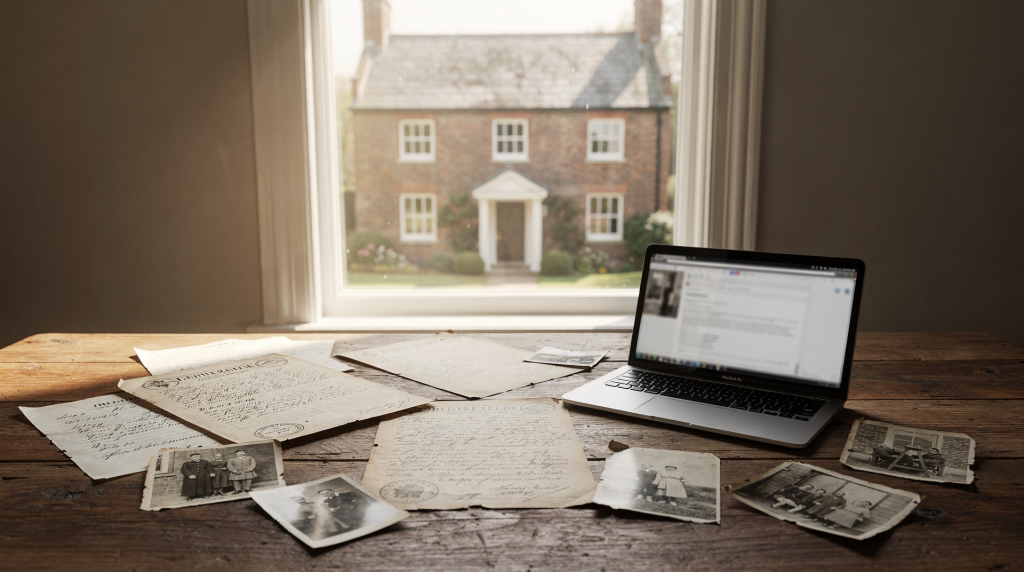
Researching the former owners of a historic property is one of the fastest ways to understand how a building evolved, who shaped it, and why it survives in its present form. The process works best when you treat it like a chain of evidence: start with the most recent owner, move backward, and confirm each step with more than one source.
I learned this the hard way on a Georgian townhouse in Bath where the deeds named a merchant family for three generations, but the physical evidence — a service wing added in 1842, a blocked doorway, a change in floor levels — didn’t match their tenure. The real story emerged only when I cross-referenced directories, rate books, and a single newspaper notice about a lease assignment. The owners had decamped to Bristol and let the house to a succession of tenants, one of whom ran a small school and made those alterations. Without that extra layer of research, I would have attributed every change to the wrong people.
Why former owners matter
Former owners are not just names in a deed book. They can explain additions, alterations, repairs, inheritance transfers, occupancy patterns, and even periods of neglect or subdivision. When I walk through a house and see a Victorian range in what was clearly once a Georgian kitchen, or a staircase that changes style between floors, I’m already forming questions about who commissioned that work and why. The ownership record is usually where the answers begin.
For a historic house, the ownership trail often reveals:
- when the property changed hands
- whether it passed by sale, inheritance, sheriff’s sale, or other transfer
- who lived there versus who only owned it
- clues about building dates, remodeling campaigns, and original use
- connections to local families, trades, businesses, and institutions
One thing I’ve noticed repeatedly: owners who were also occupants tend to leave a more coherent physical imprint. Absentee landlords, by contrast, often authorised piecemeal repairs or let tenants make their own modifications — and that shows in the building fabric. Understanding the distinction between ownership and occupancy is not an academic exercise; it directly affects how you interpret what you’re seeing in the house.
Start with the most recent owner
The best entry point is the current or most recent owner, because that record usually leads directly to the prior transfer. If you do not know the name, begin with the property tax record or assessment record, which often provides the current owner and parcel information. This sounds obvious, but I’ve watched researchers waste hours chasing names in census returns when they hadn’t first confirmed the legal owner through the assessor’s office — a five-minute step that would have saved them the trouble.
What to collect first
- street address
- parcel or assessor number
- legal description
- current owner name
- any visible clues from the property itself, such as plaques, inscriptions, or cornerstones
These details help you avoid confusion when an address has changed, a lot has been subdivided, or a house has been renumbered. I keep a running note of every address variant I encounter — the 1890 directory might list it as “High Street” while the 1920 map shows “London Road,” and if you don’t catch that, you’ll miss records.
Build the chain of title
A chain of title is the historical record of ownership transfers for a property. The basic method is simple: find the current deed, then work backward from one owner to the previous owner, repeating the process until the records end or the parcel changes. What makes it challenging in practice is that transfers are rarely a neat sequence of straightforward sales. Inheritance, mortgage defaults, divorce settlements, and corporate acquisitions all leave different paper trails, and each requires a slightly different approach to trace.
Step-by-step process
- Find the current deed or most recent transfer.
- Note the seller, buyer, date, book/page reference, and legal description.
- Use the deed index to locate the seller’s earlier purchase.
- Repeat backward through each transfer.
- Watch for inheritance, liens, foreclosure, divorce settlement, or sheriff’s sale, because these can break the normal sale pattern.
- Record every citation so you can verify the sequence later.
I cannot overstate the importance of that last step. A chain of title built without proper citations is essentially useless — you’ll have no way to retrace your steps if something doesn’t add up, and you’ll struggle to share your findings with anyone else who needs to verify them.
What to note from each deed
- names of grantor and grantee
- date recorded and date executed
- price or stated consideration
- legal description
- references to earlier deeds
- boundary neighbors or landmarks
- rights-of-way, easements, or restrictions
The stated consideration — the price recorded in the deed — deserves a word of caution. In many periods, particularly before the 20th century, the figure given was often nominal or deliberately understated to reduce stamp duty. A deed might record “ten shillings” when the actual sale price was hundreds of pounds. Don’t take it at face value; look for corroborating evidence in tax assessments, sale notices, or personal papers.
Best sources for former owners
Different records answer different questions. Deeds tell you who legally owned the property. Other records tell you who lived there, what they did, and how the house changed over time. I think of deeds as the skeleton of the research — essential for structure — and everything else as the flesh that gives the story its shape and texture.
| Source | What it helps you find | Best use |
|---|---|---|
| Deeds and land records | Ownership transfers, dates, legal descriptions, sale amounts | Core source for chain of title |
| Tax records | Owner names, parcel history, changes in assessed value | Good starting point when ownership is unclear |
| Probate records and wills | Inheritance, heirs, estate transfers | Essential when property passed after death |
| City directories | Occupants, household names, occupations | Helps distinguish owners from tenants |
| Census records | Household members, occupations, family structure | Useful for occupancy and social context |
| Newspapers | Sale notices, obituaries, social mentions, fire or renovation reports | Excellent for narrative detail |
| Maps and atlases | Property layout, neighboring lots, changing boundaries | Useful when the parcel has been altered |
| Insurance maps | Building footprint, use, surrounding structures | Strong for physical context |
| Historical societies and local archives | Photographs, family papers, local histories | Often the richest contextual source |
I’ve found that insurance maps, particularly the detailed Goad and Sanborn series, are underused by house historians. They show building footprints, construction materials, and sometimes even the position of staircases and windows — details that let you date alterations with surprising precision when cross-referenced against ownership changes.
Use probate records when ownership shifts after a death
If a deed suggests the property passed to heirs, or if the timeline jumps unexpectedly, check probate records and wills. Estate files can show how land was distributed, who inherited the property, and whether a sale was required to settle debts. I’ve seen chains of title that appeared to have a twenty-year gap, only to discover that the property had been tied up in probate the entire time, with no formal transfer recorded until the estate was finally settled.
This is especially important when:
- a widow, child, or executor appears as the next owner
- the property stayed in one family for generations
- the deed references an estate, administrator, or probate court
- ownership changes but occupancy does not
That last scenario — ownership changing while occupancy remains the same — is a classic probate situation. A widow might continue living in the house while legal title passes to her children, and without checking the will, you’d never understand the arrangement.
Use directories and census records to identify who actually lived there
A deed proves legal ownership, not necessarily residence. City directories and census records help you see whether an owner occupied the property, rented it out, or used it for business purposes. This distinction matters enormously when you’re trying to connect physical changes in the building to specific people. An owner who never set foot in the house is unlikely to have commissioned that Arts and Crafts fireplace; a long-term tenant might have.
Practical rule
If the deed says one name but the directory lists another household at the address, do not assume the deed is wrong. The building may have been rented, sublet, used as a lodging house, or divided into units later. I once researched a terraced house in Norwich where the directories showed six different surnames at the same address over a forty-year period, while the deeds recorded a single owner. The house had been let as furnished rooms, and each tenant left their own small mark — a shelf here, a cupboard there — none of which could be attributed to the legal owner.
Trace the property through newspapers
Newspapers can fill in the human story behind the chain of title. Search for the owner’s name, the address, and nearby landmarks in local papers. I approach newspaper research with a specific mindset: deeds give me the framework, but newspapers give me the people. A sale notice might reveal that the vendor was “removing to London,” explaining why they sold. An obituary might mention that the deceased had “improved the property considerably,” sending me back to the building to look for evidence of that work.
Useful items to look for:
- property sale notices
- obituaries
- marriage announcements
- business advertisements
- fire, flood, or theft reports
- renovation or “improvement” notices
- society columns mentioning entertaining or address changes
Even a short mention can link an owner to a date, a profession, or a family connection that deeds never show. I once found a three-line notice in a local paper from 1878 reporting that a Mrs. Henderson had “entertained friends at her residence, The Limes, on the occasion of her daughter’s marriage.” That single sentence confirmed the house name, the family’s social standing, and the date they were in residence — none of which appeared in any official record.
Watch for common complications
Historic property research is rarely linear. Older properties often have incomplete records, changed boundaries, or transfers that do not look like ordinary sales. Expecting a clean, unbroken chain is a recipe for frustration. The skill lies in recognising when something doesn’t fit and knowing which alternative record to consult next.
Common problems and how to handle them
- Renumbered streets: use old maps and directories to match former addresses. I keep a chronological list of directory entries for the property so I can see exactly when the numbering changed.
- Subdivided parcels: compare legal descriptions across deeds to see when the lot changed. A sudden reduction in acreage or a new boundary description is your clue.
- Name variations: search for initials, alternate spellings, married names, and corporate owners. A woman might appear as “Mrs. John Smith” in one record and “Elizabeth Smith” in another — same person, different indexing.
- Inherited property: check probate and estate files when the deed chain jumps. If the grantor in one deed doesn’t match the grantee in the previous one, probate is the most likely explanation.
- Corporate or institutional ownership: search under company names, trusts, churches, or municipalities. These entities often held property for decades with no visible transfer, then sold it in a single transaction.
- Missing online records: go to the county office, local archive, or historical society for older books and microfilm. I’ve lost count of the times a crucial deed volume existed only in a basement strongroom, never digitised, and required a personal visit to retrieve.
A practical workflow you can follow
I’ve developed this phased approach over years of trial and error. It prevents the common mistake of diving into detailed census research before you’ve established the basic ownership framework — which is like trying to hang wallpaper before you’ve built the wall.
Phase 1: Establish the current position
- Confirm the address and parcel number.
- Pull the current owner from tax or assessment records.
- Get the most recent deed reference.
Phase 2: Work backward through title
- Record each transfer in order.
- Follow the deed references to prior owners.
- Note inheritance, sale type, and any unusual wording.
Phase 3: Add people and context
- Check directories for occupants.
- Check census records for household composition.
- Search newspapers for the owners’ names and address.
Phase 4: Verify with local sources
- Visit or contact the local historical society.
- Ask about photographs, family files, maps, and clippings.
- Compare the documentary record with the building itself.
That last step — comparing the documentary record with the building itself — is where the research comes alive. I’ve stood in attics and traced roof lines that matched a newspaper report of an 1860s fire. I’ve found bricked-up windows that aligned with a tax record showing a reduced number of rooms. The building is always the final source, and it will tell you whether your paper trail makes sense.
A simple research log template
Keep a clean log from the beginning. It saves time and prevents duplicate work. I use a spreadsheet with these columns, and I update it after every research session — even a quick one. Without this discipline, you’ll find yourself pulling the same deed twice or forgetting which directory year you’ve already checked.
| Date | Source | Name / Address | Key detail | Next step |
|---|---|---|---|---|
| 2026-10-05 | Tax record | Current owner | Parcel number, current mailing address | Search most recent deed |
| 2026-10-05 | Deed book | Seller and buyer | Transfer date, legal description | Find earlier deed reference |
| 2026-10-05 | City directory | Occupant | Occupant differs from owner | Search census and newspaper mentions |
How to tell whether a former owner was important to the building
Not every owner changed the house in a visible way. Some held the property for decades and left no trace beyond their name in the deed book. Others owned it for five years and transformed it. The skill is in identifying which owners actually shaped the building, and that requires correlating the paper record with physical evidence.
Focus on owners whose tenure lines up with a physical change or major event. Look for:
- a sale followed by an addition on a map or insurance plan
- a new owner appearing in directories with a different occupation
- a newspaper notice about repairs, enlargement, or sale
- a jump in assessed value after a transaction
- estate records showing a family division of property
When several clues line up, you can usually make a strong case that a particular owner influenced the building’s history. I’m cautious about attributing changes to a single owner based on one piece of evidence alone — the best attributions rest on multiple sources pointing in the same direction, ideally with the building itself providing corroboration.
Typical mistakes to avoid
- stopping at the first deed instead of tracing backward
- confusing legal owner with actual occupant
- trusting a single online record without verification
- ignoring probate records when ownership passes after death
- overlooking old spellings and married names
- failing to track boundary changes over time
- assuming every property record is complete or digitized
That last point deserves emphasis. I’ve met researchers who assumed that because they couldn’t find a record online, it didn’t exist. In reality, vast quantities of property records — particularly pre-1900 deeds, rate books, and estate papers — remain undigitised and sit in county record offices, diocesan archives, and private collections. Online research is a starting point, not the whole job.
When to stop researching
You can stop when you have enough evidence to answer your question clearly. For a house history, that may mean identifying the first owner, reconstructing the chain of title, or connecting one owner to a major alteration. Research can expand endlessly if you let it, and part of the discipline is knowing when the returns have diminished.
For a deeper architectural history, continue until you can tie ownership changes to physical changes in the building itself. That is where the research becomes genuinely useful for restoration, interpretation, and preservation. When you can stand in a room and say with confidence that the cornice dates from the Henderson family’s improvements of 1878, and you have the newspaper notice, the directory entry, and the stylistic evidence to back it up, you’ve done the work that matters.
Quick checklist
- confirm the current address and parcel
- identify the current or most recent owner
- work backward through deeds
- note probate and inheritance transfers
- compare deeds with tax records
- use directories and census records for occupancy
- search newspapers for names and addresses
- consult local archives and historical societies
- record every source and reference
FAQ
How do I find the former owners of a historic property?
Start with the current owner, then trace backward through deeds and land records, using tax records, probate files, directories, and newspapers to fill gaps. The key is working systematically from the known to the unknown, verifying each link before moving to the next.
What if the property was inherited, not sold?
Check probate records, wills, and estate distributions. These often explain why the property changed hands without a normal sale. Inheritance transfers can be harder to trace than sales because they don’t always generate a new deed immediately — the property may sit in an estate for years before formal transfer occurs.
Can I use online records only?
Online records are a good start, but older properties often require county records, archives, microfilm, or local historical societies for complete research. I treat online databases as a first pass; the deeper work almost always involves physical visits or correspondence with archivists who know their collections intimately.
How far back can property ownership be traced?
It depends on the area and record survival. Some places have records that extend very far back, while others only have partial runs or later digitized coverage. In parts of England, I’ve traced ownership to the 16th century through manor court rolls and feet of fines; in other areas, the record goes dark before 1800. The limit is set by what survives, not by your research skills.
What is the difference between owner and occupant?
The owner holds legal title. The occupant is the person or family living at the address. They are often, but not always, the same. Understanding this distinction is fundamental to interpreting both the documentary record and the physical evidence in the building. An owner’s name on a deed tells you who paid for the property; an occupant’s name in a directory tells you who lit the fires and wore the stair treads.